

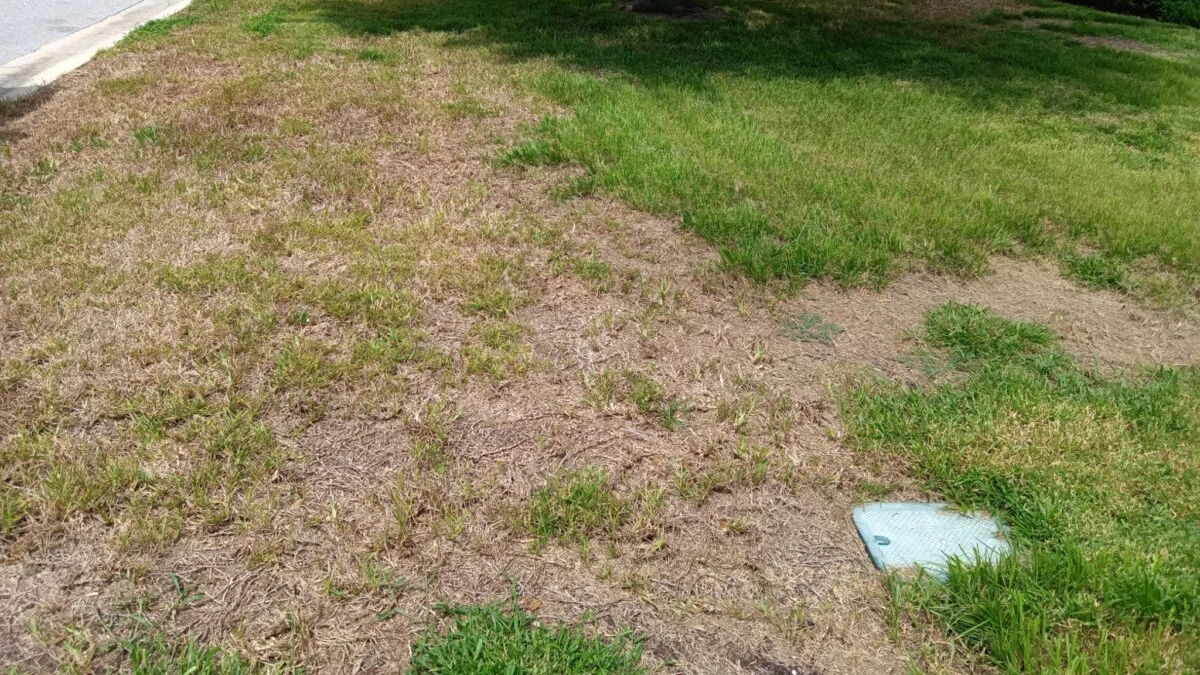
The Nashville area sits on limestone. In many yards the soil is a dense clay, and in some it is only a few inches deep before you hit rock. Both conditions can be handled, but they need attention before the sod goes down.
Clear the site
- Remove the old lawn and weeds.
- Rake out rock fragments and construction debris. Buried concrete, gravel and chunks of limestone create dry spots that brown out first.
- Note any ledges or outcrops that cannot be moved, so the grade can be planned around them.
Loosen compacted clay
Construction traffic and years of foot traffic pack clay down hard. Till or loosen the top few inches so new roots can push down and water can soak in. Do not work clay when it is wet: it smears and dries into clods.
Build up thin spots
Where rock is close to the surface, add good topsoil to give the roots more depth. These shallow areas dry out fastest in summer, so a few extra inches of soil make a real difference.
Grade for drainage
Slope the soil away from the house and smooth out low spots where water collects. Clay holds water, so poor drainage shows up quickly as soggy patches in spring and hard, cracked ground in late summer.
Test the soil
Soil pH and nutrients vary from yard to yard, even on the same street. A soil test, available through the county Extension office, shows whether lime or other amendments are needed before you lay sod.
Ready to plan your lawn? Call 833-SOD-2YOU or (833) 763-2968 or send your project details for project-specific pricing.